Today we report on a project from our business unit Smart Systems.
In the autumn of last year, we were awarded the contract for an exciting pilot project with the Ministry of Justice of North Rhine-Westphalia. The state of North Rhine-Westphalia (NRW) wants to reduce the suicide rate in German correctional facilities, which is comparatively high relative to people who are not incarcerated, by relying on, among other things, artificial intelligence for suicide prevention.
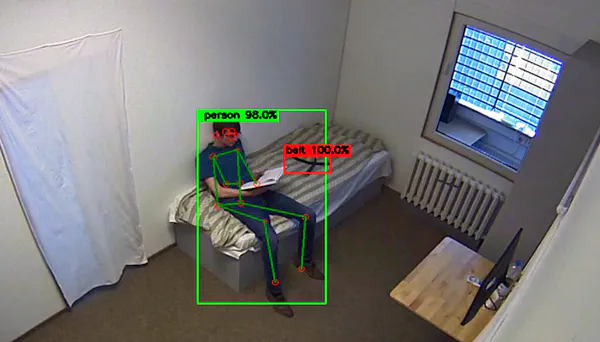
The goal of the project is to develop an intelligent assistance system that can detect indications of suicidal intent in individual inmates and warn the supervisory staff early on. Using the camera surveillance already in place in the so-called “Schlichtzellen” (sparsely furnished cells), the detection software we develop is to recognise both potentially dangerous objects and conspicuous behaviour patterns of the inmates and send a warning signal to the supervisory staff. For the software to identify potentially dangerous objects and conspicuous behaviour, it has to be trained using methods of artificial intelligence, known as machine learning. The training data required for this is created with camera recordings in a detention cell that was replicated true to the original specifically for the project.
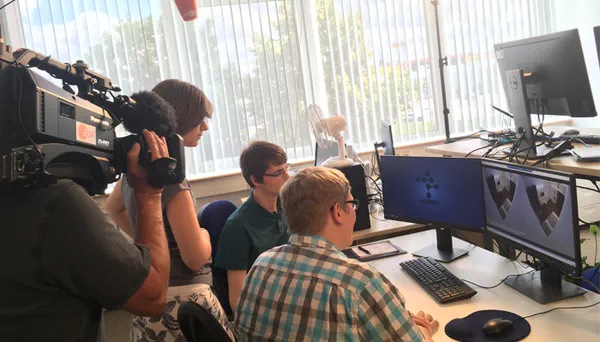
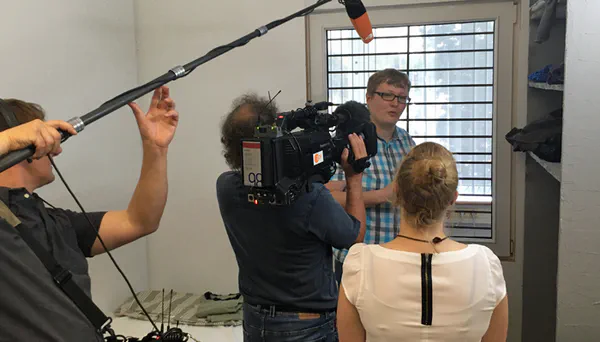
On the occasion of World Suicide Prevention Day on 10 September, the science programme nano reported on the project in a TV feature. The filming by ZDF and 3sat had already taken place in June, among other places at the Düsseldorf correctional facility (JVA Düsseldorf) and at our premises in the Technologie Centrum Chemnitz. In addition to interviews with Rene Müller, federal chairman of the prison officers' union Gewerkschaft Strafvollzug, Peter Biesenbach, Minister of Justice of North Rhine-Westphalia, and our team of experts for artificial intelligence, Kim Schmidt, Karsten Schwalbe, and Alexander Groh, the feature provides an interesting insight into the goals and the concrete implementation of the pilot project.
Here is the TV feature by 3sat nano from 10 September 2020: Kann KI Suizide im Gefängnis verhindern? (5:47 min)
An extensive audio feature was also published back in July on Deutschlandfunk Kultur:
Suizidprävention mit Künstlicher Intelligenz - Big Brother passt auf Häftlinge auf
The press also reported on the project:
Freie Presse article from 10 July 2020: Warum eine Firma eine Haftzelle nachbaut
BILD article from 20 June 2020: Neue Software soll Selbstmorde verhindern